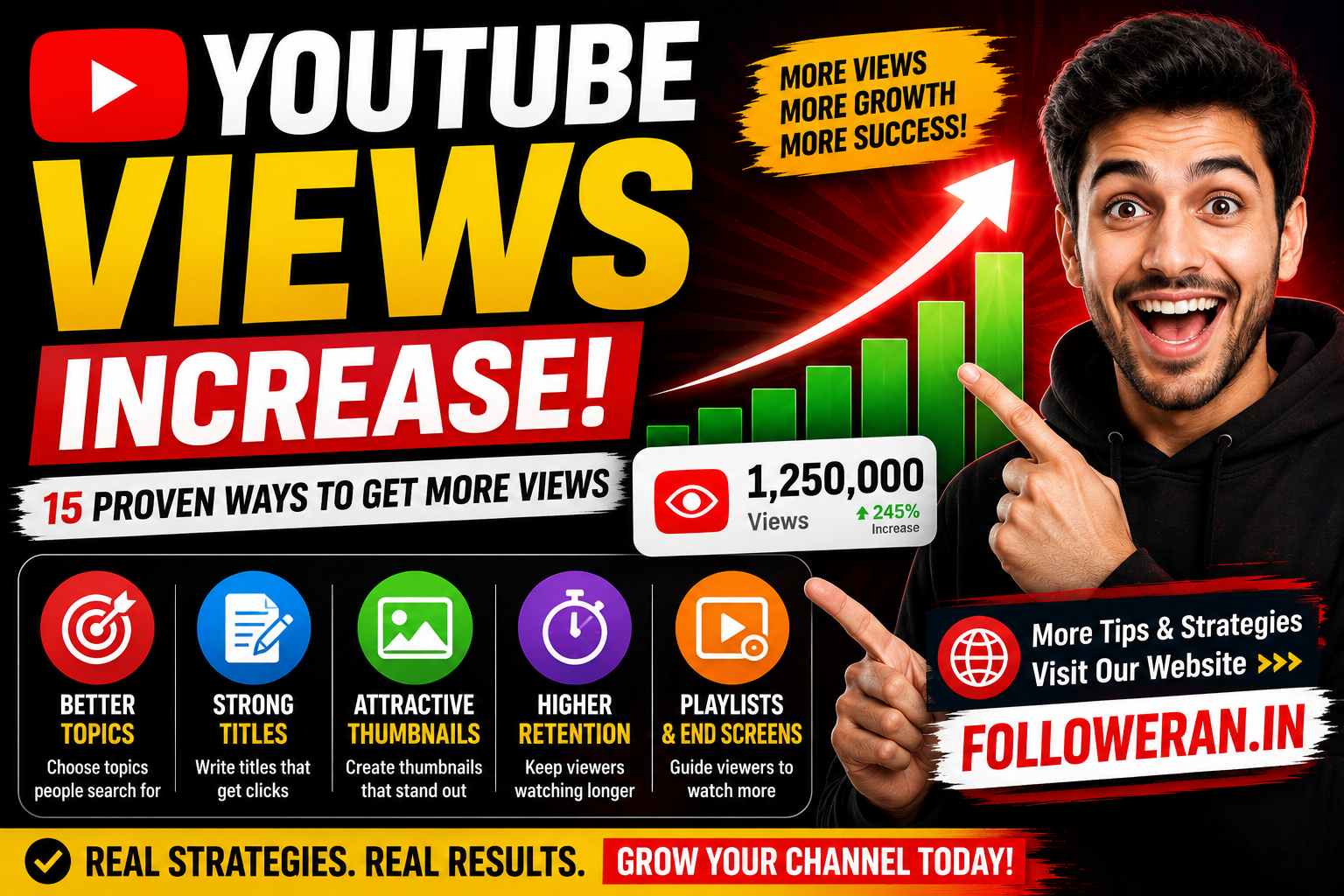
YouTube Views Increase: 15 Proven Ways to Get More YouTube Views
If you want to increase YouTube views, the answer is not simply uploading more videos and hoping the algorithm notices you. YouTube's current recommendation system is designed around helping viewers find videos they are likely to watch and enjoy. It considers viewer personalization, how a video performs when shown to people, and factors such as topic interest and competition.
That means successful YouTube growth starts with the audience rather than with shortcuts. A video needs a topic people care about, a title and thumbnail that accurately communicate the value, and content that keeps viewers interested after they click. YouTube also provides creators with analytics that can reveal where viewers discover videos, whether they click, how long they watch, and where they stop watching.
If your channel is struggling to get views, don't assume that the channel is permanently stuck. A better approach is to identify which part of the viewing journey needs improvement and systematically fix it.
What Does “YouTube Views Increase” Actually Mean?
The phrase YouTube views increase can mean several things. You might want more views on a single video, more consistent views across your channel, more views from YouTube Search, or more recommendations on Home and Suggested Videos.
These are related but not identical goals.
For example, a tutorial may receive most of its traffic from YouTube Search because viewers are actively looking for an answer. An entertainment video might receive more traffic from Home or Suggested Videos because viewers discover it while browsing. YouTube says Search ranking considers how well the title, description, and video content match the search query, along with engagement and quality.
The most useful goal is therefore not simply:
“How do I get more views?”
Instead, ask:
“How can I get the right viewers to choose, watch, enjoy, and continue watching my videos?”
That question leads to a much stronger growth strategy.
1. Choose Topics People Actually Want to Watch
The first step toward increasing YouTube views happens before you press the record button.
A great video about a topic nobody cares about can struggle, while a simple video answering a common question can attract viewers for months or years. YouTube identifies topic interest as one of the external factors that affects how many people may see videos. Competition and seasonal changes also influence potential reach.
Research what your audience is already interested in. Look at questions people ask, videos they watch, comments they leave, and related subjects surrounding your niche.
Instead of making a generic video such as:
“YouTube Tips”
consider creating something more specific:
“10 YouTube Mistakes That Stop Small Channels From Getting Views”
The second topic communicates a specific problem and a specific benefit.
Build Content Around Problems
One of the easiest ways to find video ideas is to identify problems your audience wants solved.
For example:
- How to increase YouTube views
- How to get more subscribers
- Why YouTube videos get impressions but no clicks
- How to improve YouTube retention
- How to create better thumbnails
- How to rank videos in YouTube Search
- Why a new channel isn't getting views
When your content answers a real question, you have a much clearer reason for someone to click.
2. Create Better YouTube Titles
Your title is one of the first things viewers use to decide whether a video is worth watching.
YouTube recommends titles that are accurate and succinct, with important words placed near the beginning. It also distinguishes between searchable titles that clearly explain what a video offers and intriguing titles designed to create curiosity.
For example:
Weak:
My New YouTube Strategy
Better:
How to Increase YouTube Views: 15 Proven Strategies
The second title immediately tells the viewer what they will learn.
However, avoid making the title dramatically promise something that the video does not deliver. YouTube warns against misleading, deceptive, sensational, or inaccurate titles and thumbnails.
The best title creates interest without creating disappointment.
3. Improve Your YouTube Thumbnails
A thumbnail can determine whether somebody notices your video among dozens of other options.
YouTube says viewers generally see the thumbnail and title before deciding whether to watch, and YouTube's own guidance says 90% of the best-performing videos have custom thumbnails.
A strong thumbnail should communicate the idea quickly.
Avoid filling the thumbnail with tiny text and too many visual elements. Instead, use a clear subject, readable wording when text is necessary, and a composition that makes sense even when the thumbnail is displayed at a small size.
For example, a video about increasing views might use:
GET MORE VIEWS
with an analytics graph and a clear visual showing growth.
The thumbnail should complement the title rather than simply repeat it.
4. Increase Click-Through Rate Without Clickbait
Your impressions click-through rate (CTR) tells you how often people watched a video after seeing its thumbnail on YouTube. YouTube describes CTR as an indicator that can help creators understand how appealing their thumbnail, title, and video packaging are.
If your video receives many impressions but comparatively few clicks, your packaging may need improvement.
Ask:
- Is the topic obvious?
- Does the thumbnail stand out?
- Does the title create a clear reason to watch?
- Is the benefit understandable?
- Does the thumbnail work on mobile?
- Does the title accurately represent the video?
Don't chase an impressive CTR by misleading viewers.
A high click rate followed by viewers immediately leaving can be a sign that the packaging promised something the video didn't deliver. YouTube's recommendation system considers whether viewers choose to watch and whether they continue watching.
5. Make the First 30 Seconds Strong
Getting someone to click is only half the job.
Now you have to convince them to stay.
YouTube's audience-retention tools specifically highlight the first 30 seconds. A strong intro can indicate that the beginning of the video matched the viewer's expectation from the title and thumbnail and kept them interested.
This means you should avoid unnecessary introductions.
Instead of spending the opening:
“Hello everyone, welcome back to the channel. I hope you're doing well. Today we're going to discuss…”
move quickly toward the value.
For example:
“If your videos are getting impressions but barely any views, these five changes can make a major difference. Let's start with the mistake most small channels make.”
The viewer immediately knows what problem you're solving.
6. Improve Audience Retention
Audience retention tells you how your viewers behave throughout the video.
If people consistently leave during a particular section, investigate why.
Perhaps the explanation is too long. Maybe the video repeats information. Perhaps the editing slows down. Maybe the most interesting information appears too late.
YouTube recommends using retention curves to identify where viewers drop off, where they remain engaged, and where spikes occur. If an important moment performs especially well later in a video, YouTube suggests considering whether similar compelling information could be introduced earlier.
Think of your video like a road.
Your title and thumbnail get someone into the car. Your introduction gets them moving. Every unnecessary section is another speed bump.
Keep the journey interesting.
7. Don't Make Videos Longer Just to Make Them Longer
A common misconception is that longer videos automatically generate more views or better performance.
YouTube's current guidance says there is no universal ideal video length. The appropriate length depends on the content, audience, and purpose. YouTube recommends making the video as long as necessary to provide value without artificially stretching it.
If your topic requires 20 minutes, make a useful 20-minute video.
If the answer can be explained properly in six minutes, make it six minutes.
Viewers can tell when a video is padded with unnecessary information.
The objective isn't maximum duration. It is maximum useful viewing experience.
8. Use YouTube Search Strategically
YouTube is also a search engine, which makes keyword targeting useful for videos that answer specific questions.
YouTube says Search ranking considers how well the title, description, and video content match the viewer's search, along with engagement and quality.
If your target keyword is:
youtube views increase
you could naturally incorporate it into:
- Your video title
- Your description
- Your spoken content
- Relevant chapters
- Supporting content on your website
Don't repeat the keyword unnaturally dozens of times.
Instead, create a genuinely useful video around the subject.
For example:
Title:
YouTube Views Increase: 15 Ways to Get More Views
Opening:
“If you're looking for ways to increase YouTube views without relying on fake traffic, this guide covers the strategies that matter most.”
This tells both viewers and search systems what the video is about.
9. Create Videos That Lead to Other Videos
One successful video should not be the end of the viewer journey.
YouTube's recommendation guidance recommends helping viewers discover more of your content through series, playlists, calls to action, and end screens.
Imagine you have a channel about YouTube growth.
Instead of making unrelated videos, create a connected content system:
Video 1: How to Increase YouTube Views
↓
Video 2: How to Get More YouTube Subscribers
↓
Video 3: How to Create Better YouTube Thumbnails
↓
Video 4: How to Improve YouTube Retention
Someone interested in one topic is more likely to be interested in the next.
This creates opportunities for additional viewing without constantly needing to find completely new audiences.
10. Use Playlists Properly
Playlists are useful when several videos naturally belong together.
Instead of creating a playlist called:
My Videos
create something specific:
YouTube Growth Guide for Beginners
Then organize related videos logically.
A viewer who watches one tutorial can continue through the playlist and learn progressively.
This is especially useful for educational channels, courses, tutorials, product guides, and niche content.
11. Experiment With Shorts
YouTube's recommendation system operates across different viewing experiences, including long-form videos and Shorts. YouTube says its systems can use what viewers discover across formats to inform recommendations, although viewers' preferences can vary between formats.
That means Shorts can be useful as another way to reach potential viewers.
For example, a long video about increasing YouTube views could be divided into several short concepts:
Short 1: One thumbnail mistake killing your clicks
Short 2: Why viewers leave during the first 30 seconds
Short 3: One easy way to find better video topics
Each Short can provide standalone value while introducing people to your broader content.
Don't assume every Shorts viewer will automatically become a long-form viewer. Treat each format according to what its audience expects.
12. Study Your YouTube Analytics
If you want consistent YouTube views increase, analytics should become part of your routine.
YouTube Analytics provides metrics including impressions, CTR, views, and average view duration. These measurements help you understand how viewers discover and respond to your videos.
Look for patterns.
If impressions are high but CTR is weak, investigate your title and thumbnail.
If CTR is strong but retention is poor, examine the introduction and content delivery.
If retention is good but impressions remain limited, investigate your topic, audience, competition, and discoverability.
This creates a simple diagnostic system:
| Problem | What to investigate |
|---|---|
| Low impressions | Topic, audience, competition, search demand |
| Impressions but few clicks | Title and thumbnail |
| Good clicks but early drop-off | Introduction and expectation match |
| Strong retention but limited reach | Topic interest and competition |
| Views but few returning viewers | Content consistency and audience fit |
| One video performs extremely well | Create related follow-up content |
The numbers don't give you every answer, but they help you ask better questions.
13. Find Your Best-Performing Topics
Your previous videos contain valuable information about your audience.
Look at your strongest videos and identify what they have in common.
Maybe tutorials outperform opinions. Perhaps beginner topics outperform advanced subjects. Maybe your audience responds strongly to comparisons or “how-to” videos.
YouTube's current recommendation guidance encourages creators to understand their audience's interests and examine what other channels and content their audience watches.
You don't have to copy successful videos.
Instead, identify the underlying audience interest.
If “How to Increase YouTube Views” performs well, related topics might include:
- How to Increase YouTube Watch Time
- How to Get More YouTube Subscribers
- How to Improve YouTube CTR
- How to Make YouTube Thumbnails
- Why YouTube Videos Stop Getting Views
One successful topic can become an entire content cluster.
14. Build a Consistent Content Strategy
Consistency doesn't mean uploading every day.
YouTube's current recommendation guidance emphasizes sustainable quality rather than simply maximizing upload frequency. It also says taking breaks does not cause the algorithm to penalize creators.
Choose a schedule you can realistically maintain.
For example:
Monday: Long-form tutorial
Wednesday: Short
Friday: Long-form tutorial
Sunday: Short or community content
Another creator might produce one excellent video every week.
There is no single schedule that works for everyone.
What matters is creating content your audience can recognize and expect.
15. Avoid Fake Views and Artificial Engagement
When a channel struggles, it can be tempting to search for services promising thousands of views overnight.
This is not a sustainable solution.
YouTube's current Fake Engagement Policy prohibits artificially increasing views, likes, comments, or other metrics through automatic systems or by exposing videos to unsuspecting viewers. YouTube says artificial traffic may not be counted and can lead to strikes or even channel termination.
Fake views also don't solve the underlying problem.
If your video receives 10,000 artificial views but viewers aren't genuinely interested, you haven't discovered what your audience wants. You have simply changed a number.
A much better strategy is to improve the elements that create genuine viewing:
Topic → Title → Thumbnail → Click → Retention → Satisfaction → More viewing
That's the cycle worth optimizing.
A 30-Day Plan to Increase YouTube Views
If you're starting from scratch, don't try to change everything at once.
Week 1: Research
Study your existing videos and identify your best-performing topics. Look at traffic sources, impressions, CTR, retention, and audience behavior.
Find five to ten topics that are closely related to what your audience already watches.
Week 2: Improve Packaging
Create stronger titles and thumbnails for your upcoming videos.
Keep titles accurate and concise. Make thumbnails visually simple and easy to understand. YouTube specifically recommends accurate titles and thumbnails rather than misleading clickbait.
Week 3: Improve Content
Focus heavily on your openings and audience retention.
Remove unnecessary introductions. Deliver the promised information early. Use examples, demonstrations, stories, visuals, or changes in pacing where appropriate.
Week 4: Analyze and Repeat
Compare the new videos against your previous uploads.
Don't simply ask which video received the most views.
Ask:
- Which topic attracted the right viewers?
- Which thumbnail generated stronger clicks?
- Where did viewers leave?
- Which videos created additional viewing?
- Which subjects deserve follow-ups?
Then use those findings to plan the next month.
How Long Does It Take to Increase YouTube Views?
There is no guaranteed timeline.
Some videos can gain attention quickly, while others may gradually accumulate views through Search or recommendations. YouTube's recommendation system is personalized and responds to viewer behavior, content performance, topic interest, competition, and other factors.
This is why promising a specific number of views in a specific number of days is usually unrealistic.
Instead, measure progress through several indicators.
If your impressions are increasing, your packaging may be reaching more people.
If CTR improves, your title and thumbnail may be becoming more effective.
If retention improves, viewers may be finding the content more satisfying.
If returning viewers increase, you may be building a genuine audience.
Those are much more useful signals than obsessing over one view count.
Final Thoughts on Increasing YouTube Views
The best way to achieve a YouTube views increase is to stop treating views as an isolated number.
Views are the result of several things working together. You need topics people care about, titles and thumbnails that accurately communicate the value, videos that keep viewers interested, and a content strategy that gives people reasons to watch more of your channel.
YouTube's current guidance makes the principle fairly clear: focus on your audience and create videos they want to watch and enjoy. Its recommendation system evaluates viewer interests and video performance rather than simply rewarding a particular upload schedule or video format.
Use Analytics as your feedback loop. If people aren't clicking, improve the packaging. If they click and leave quickly, improve the opening. If they watch but don't continue to another video, improve your content structure and viewer journey.
And avoid artificial views.
Real viewers are the foundation of sustainable YouTube growth.
When you consistently create useful or entertaining videos for a clearly defined audience, increasing views becomes less about finding a secret algorithm trick and more about becoming better at giving viewers exactly what they want.
Frequently Asked Questions
How can I increase YouTube views naturally?
Focus on topics your audience actually wants, create accurate and compelling titles and thumbnails, improve your first 30 seconds, maintain strong audience retention, and use Analytics to understand what is working. YouTube recommends focusing on what your audience enjoys rather than trying to manipulate the recommendation system.
Why are my YouTube videos getting impressions but no views?
If a video receives impressions but relatively few people click, examine your title and thumbnail. YouTube's Analytics defines impressions CTR as how often viewers watched after seeing the thumbnail, making it a useful metric for evaluating your video's packaging.
Does uploading more videos increase YouTube views?
Not automatically. YouTube's current guidance emphasizes sustainable quality rather than simply maximizing upload frequency. A smaller number of useful, well-made videos can be more effective than uploading large amounts of content that your audience doesn't enjoy.
Do Shorts help increase YouTube views?
Shorts can provide another way for viewers to discover your content. YouTube's recommendation systems operate across different formats, although viewers can have different preferences for Shorts and long-form videos.
Should I buy YouTube views to increase my view count?
Avoid artificial view services. YouTube prohibits artificially increasing views and other metrics, and says artificial traffic may not be counted and can result in enforcement action. Focus instead on legitimate promotion, better content, stronger packaging, and understanding your audience.
