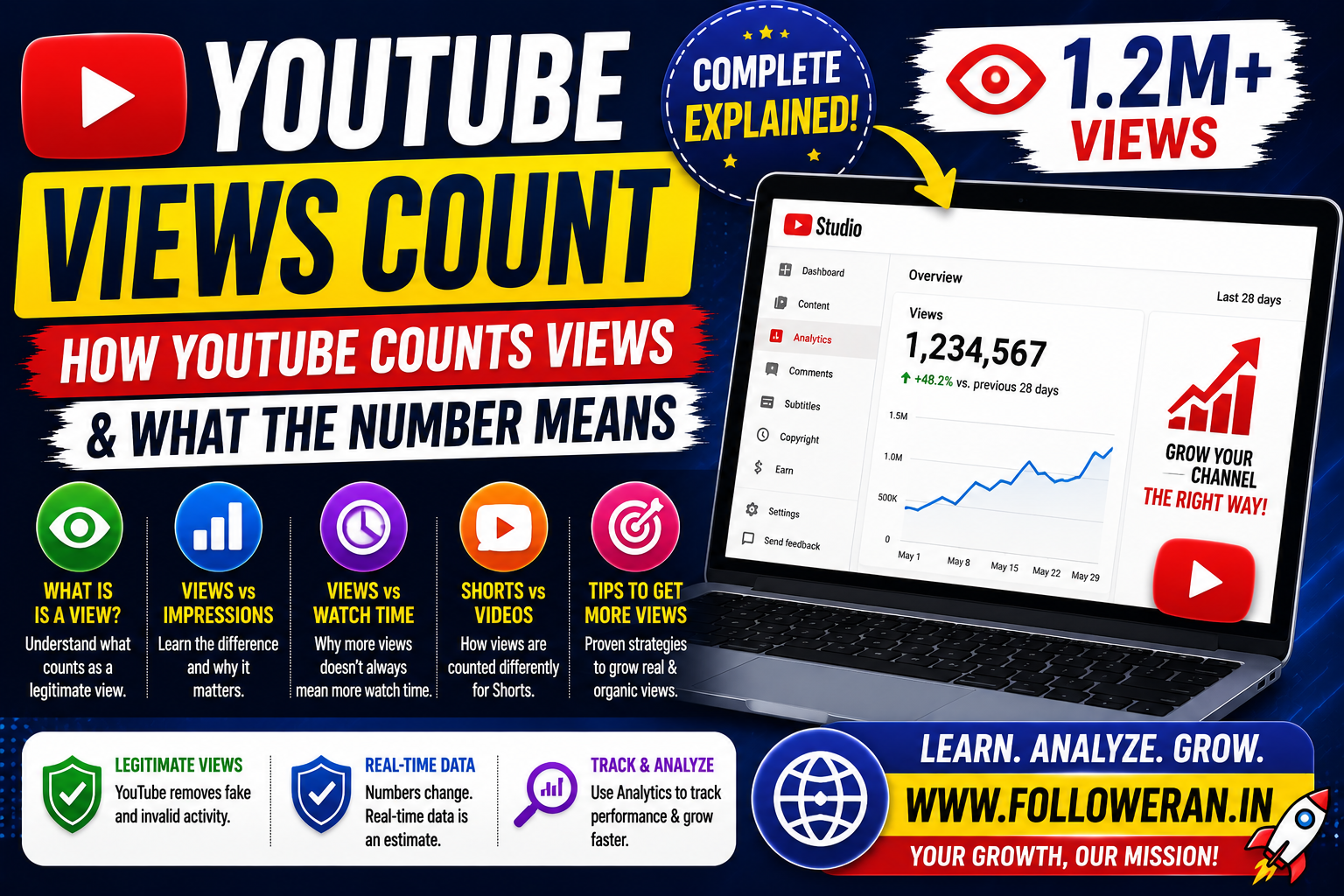
YouTube Views Count: How YouTube Counts Views and What the Number Means
If you're searching for YouTube views count, you may be wondering how YouTube counts a view, why the number sometimes changes, or why the views shown in YouTube Analytics can differ from other reports.
YouTube defines Views as the number of legitimate views for a channel or video. YouTube also says that its methodology can differ for Shorts and that the methodology for public views from advertising has been updated.
What Is the YouTube Views Count?
The YouTube views count is the number shown for a video based on YouTube's view-counting systems.
For regular videos, YouTube Analytics describes views as the number of legitimate views, and YouTube's audience documentation says the metric counts each time a video is played.
The public number you see on a video's watch page is therefore not simply a raw counter of every technical video load.
What Counts as a YouTube View?
YouTube uses systems intended to identify legitimate views rather than simply counting every possible playback signal.
This is important because YouTube also validates engagement metrics and can remove activity it considers invalid. For example, YouTube says some likes and dislikes can be periodically removed when they are identified as invalid.
Why Does the YouTube View Count Sometimes Change?
You may notice that the number of views doesn't always move in a perfectly predictable way.
Several things can contribute to differences between reports or changes in displayed numbers, including YouTube's verification and measurement systems.
YouTube says real-time activity is an estimate and may not match the number shown on the video's watch page.
This means a newly published video can show one number in real-time analytics and a different number on the public watch page.
YouTube Views Count vs YouTube Analytics
These numbers are related, but Analytics provides much more context.
YouTube Analytics can show:
- Views
- Watch time
- Average view duration
- Impressions
- Click-through rate
- Audience retention
- Subscribers
- Traffic sources
YouTube's channel-performance documentation describes views as legitimate views and separates them from watch time, subscribers and average view duration.
Looking at these metrics together is more useful than checking the public view count alone.
What Is a YouTube Public View Count?
For videos used in advertising, YouTube distinguishes between organic views, advertising-related views and the public view count.
YouTube says the public view count is the total of organic views plus eligible ad public views and that this public number is visible on the video's watch page.
The advertising view-count methodology has also changed, so creators should use current YouTube documentation rather than older explanations of how ad views are counted.
How Are YouTube Shorts Views Counted?
Shorts require special attention because YouTube has changed how it counts organic Shorts views.
YouTube's current Analytics documentation explicitly notes that its methodology for counting organic Shorts views has changed.
YouTube also uses engaged views for certain Shorts audience calculations, including the estimation of unique viewers.
So an article explaining YouTube views should not assume that Shorts and traditional videos use exactly the same measurement approach.
Views vs Unique Viewers
These two metrics are easy to confuse.
Views measure legitimate video plays.
Unique viewers estimate the number of individual people who watched your content during a selected period.
YouTube explains that if a person watches on more than one device, or watches more than once, the unique-viewer calculation treats that person as one unique viewer for the relevant period.
For example, one person can generate multiple views while still representing approximately one unique viewer.
Views vs Watch Time
A video can have a large number of views but relatively low watch time if viewers don't stay long.
YouTube defines watch time as the amount of time viewers watched your video, while average view duration represents the average amount of time watched among viewers who stayed to watch.
That's why creators should consider both:
Views → How many legitimate plays occurred
Watch time → How much time people actually spent watching
Views vs Impressions
Impressions and views are also different.
An impression is counted when YouTube registers a thumbnail being shown to a viewer in eligible places.
A view occurs when the content is actually watched under YouTube's applicable counting methodology.
YouTube's Reach documentation separates impressions, impressions click-through rate and views as different metrics.
This creates a useful funnel:
Impressions → Clicks/Views → Watch Time → Engagement
Why YouTube Views May Be Lower Than Impressions
This is completely normal.
A thumbnail can be shown many times without every viewer choosing to watch.
YouTube uses impressions click-through rate to help creators understand how often viewers watched after seeing a registered thumbnail impression.
For example:
- 100,000 impressions
- 5,000 views
would indicate that many people saw the thumbnail without starting the video from those impressions.
Why YouTube Views Can Be Higher Than Impressions
Not every view comes from a registered YouTube thumbnail impression.
YouTube lists traffic sources such as external websites, direct traffic, notifications, playlists and other sources that can generate views without necessarily producing a corresponding registered impression.
This is why impressions and total views should not be expected to match.
How to Check Your YouTube Views Count
For a channel you manage, open YouTube Studio and go to the Analytics section.
YouTube provides performance reports for your videos, Shorts, live streams and other content types. The content-performance reports include views, watch time and other metrics.
You can also review recent content performance and compare activity over different periods.
How to Check Real-Time YouTube Views
YouTube Studio provides a Realtime report designed to give early insight into recently published videos.
YouTube says the expanded real-time report lets creators compare performance over 60 minutes and 48 hours. It also notes that real-time activity is an estimate and may not exactly match the public watch-page view count.
This makes real-time data useful for spotting trends, but not necessarily for treating the number as a final verified count.
How to Increase Your YouTube Views Count Organically
If your objective is to increase legitimate views, focus on the factors that encourage real viewers to click and watch.
Create Topics With Real Demand
Make videos around questions, problems and subjects your audience genuinely wants to explore.
Improve Titles
A good title makes the video's subject and value easy to understand.
Improve Thumbnails
Use a clear visual idea and make the thumbnail readable on smaller screens.
Strengthen the Opening
Deliver the promised value quickly instead of spending too long on introductions.
Use Search-Friendly Topics
Create videos around questions people search for on YouTube.
Build Video Series
Related videos can encourage viewers to continue watching your channel.
Use Playlists
Organise related videos to make the next relevant video easier to find.
Promote Relevant Videos
Share videos through your website and social platforms where they are genuinely useful to the audience.
How to Improve YouTube Views Without Artificial Traffic
Avoid treating a large view number as the only objective.
A sustainable strategy is:
Topic → Thumbnail → Click → Watch → Next Video → Return Visit
If the content satisfies the viewer, you have a better chance of building long-term audience behaviour rather than simply increasing a counter.
What Metrics Should You Track Alongside Views?
A useful YouTube dashboard should include:
| Metric | What It Tells You |
|---|---|
| Views | Legitimate video plays |
| Watch time | Total viewing time |
| Average view duration | Typical viewing time |
| Impressions | Thumbnail exposure |
| CTR | How often impressions led to views |
| Retention | Where viewers stayed or left |
| Subscribers gained | Audience conversion |
| Returning viewers | Repeat audience behaviour |
YouTube's current Analytics documentation supports viewing these metrics together to understand content performance.
Common YouTube Views Count Questions
Why are my YouTube views not updating?
Recent view activity can take time to appear consistently across different YouTube reports, and real-time analytics are estimates.
Why did my YouTube views go down?
Numbers can change as YouTube's systems validate activity and update metrics. Don't assume that every fluctuation means your video lost genuine viewers.
Are multiple views from one person counted?
Multiple plays can contribute to the view count, while YouTube's unique-viewer measurement is intended to estimate individual people rather than total plays.
Are YouTube views and watch time the same?
No. Views measure legitimate plays, while watch time measures the amount of time people spent watching.
Are Shorts views counted the same as long-form views?
YouTube states that it has changed its methodology for counting organic Shorts views, so creators should not assume the two formats are measured identically.
Explore YouTube and Social-Media Marketing Services
If you're comparing YouTube views, subscribers, likes and other social-media marketing services, you can explore:
Review the current services, pricing, requirements and terms before placing an order.
Frequently Asked Questions
What is YouTube views count?
It is the number of legitimate views recorded for a YouTube video or channel.
How does YouTube count a video view?
YouTube uses systems designed to identify legitimate views. For videos, its audience documentation describes the metric as counting each time a video is played.
Why is my YouTube Analytics view count different from the public count?
Real-time Analytics provides estimated activity and may not match the public watch-page count.
What is the difference between views and unique viewers?
Views measure legitimate plays, while unique viewers estimate the number of individual people who watched within a selected period.
How can I increase my YouTube views count?
Focus on relevant topics, compelling titles and thumbnails, strong openings, audience retention, playlists, related videos and legitimate promotion.
Final Thoughts
Understanding the YouTube views count is important because the public number is only one part of your channel's performance.
YouTube currently defines views as legitimate views and provides additional metrics such as watch time, average view duration, impressions, CTR and unique viewers to give creators a more complete picture.
If you want to increase your views, focus on better topics, stronger thumbnails, accurate titles, viewer retention and useful follow-up content rather than chasing an artificial number.
For more YouTube and social-media marketing resources, visit www.followeran.in.
